Chinese BBQ Ribs
February 17, 2010 § 1 Comment
And here’s the ribs recipe that I made for Chinese New Year. With really tender meat just coming off the bone and a great, sticky caramelized crust, these were a big hit that day. The recipe was adapted from RasaMalaysia.

Chinese BBQ Ribs (adapted from Rasa Malaysia)
Marinade – For the marinade, the measurements of the ingredients do not have to be exact. Instead, make sure that you taste and season according to your personal preference.
3 tablespoons honey
1 1/2 tablespoons Hoisin sauce
1 1/2 tablespoons soy sauce
1/2 teaspoon five spice powder
1/2 teaspoon sesame oil
salt to taste
1 rack baby back pork ribs
6 cloves garlic, finely chopped
Add all the marinade ingredients in a sauce pan on med-high heat and stir until blended. Cool.
Rub the ribs on both sides with the chopped garlic and then marinate the ribs with 2/3 of the sauce, preferably overnight, though 6 hours should be enough.
Preheat your oven to 325 degrees F. Line baking sheet with foil and place the ribs on top. Cover with another sheet of foil and roast for 2 hours.
Afterwards, take the top sheet of foil off, coat the ribs with the rest of the marinade, and set the ribs under the broiler for 5 minutes, so the crust gets slightly charred and crusty. (This is where I set off the fire alarm in my apartment). Let the meat rest for about 10 minutes, and then dig in.
Snow days and Snickerdoodles
February 9, 2010 § Leave a comment
The snow has really been pounding down on us here in D.C. This past weekend we got about 2 feet and now, it’s supposed to be another 8-10 inches from what I’ve heard. So, where the heck does that leave me? Baking, reading, catching up on television shows, eating and sleeping. Because I only have classes on Mondays and Wednesdays, and because this coming Monday is President’s Day, I’ll have had no classfor two weeks! (Yeah, I don’t care if I’m rubbing it in. I’m bound to pay for it later. Maybe evening make up classes?)


And of course, because nothing is better than the smell of sugar, butter, and cinnamon in the oven, and because they were the only ingredients I had on hand, I decided to make snickerdoodles. I don’t bake that often when I’m at home (I think it may be an Asian family thing…not many Chinese recipes require use of an oven), so this was a pretty big achievement for me. Especially since the cookies came out absolutely perfectly – doughy and cinnamon-y – and made the entire apartment smell like absolute heaven.

Snickerdoodles
Ingredients
2 3/4 cups flour
2 teaspoons baking powder
1 cup (two sticks) butter, salted is fine but make sure it’s at room temperature
1 1/2 cups granulated sugar
1/2 teaspoon salt
2 large eggs
1 teaspoon vanilla extract
1/3 cup granulated sugar
2 teaspoons ground cinnamon
Preheat the oven to 350 F.
Beat butter and sugar using an electric whisk until smooth. Beat eggs into the butter and sugar mixture one at a time, until fully incorporated. Scrape down the sides and then add vanilla and mix again. Add flour, salt, and baking powder to the mixture, a little at a time, and beat until you have a smooth dough that comes together. Form into a ball and chill the dough in the fridge for about 20 minutes.
Meanwhile, mix the 1/3 cup sugar and cinnamon. Take the dough out of the fridge and roll into 1 inch balls. Coat the balls of dough with the cinnamon sugar mixture and place on an ungreased baking sheet. Bake for 12-15 minutes or until the edges start to get slightly browned. Cool and serve.
Samgyupsahl
January 8, 2010 § 1 Comment
I tried this grilled pork belly dish for the first time at Honey Pig in Annandale, VA. When I went grocery shopping with my mom this weekend at H Mart, I saw already-sliced pork belly and decided to give it a go. Though I know the traditional way to prepare and eat this dish requires that the meat is unseasoned and given the good old lettuce wrap treatment, I wanted something spicy, sweet, and savory.
With the 7 lb container of gochujang that I still have from one of my mom’s impulse buys, I threw together a bunch of traditional Asian ingredients for a marinade and hoped for the best. Surprisingly, the pork belly turned out just as I had hoped. Here’s the gist:

3 heaping tablespoons of gochujang, Korean red pepper paste
1 small onion, diced
3 cloves of garlic, minced
1 green chili pepper, diced
3 tablespoons soy sauce
1 tablespoon sesame oil
2 teaspoons sugar
1.5 teaspoons salt
as much water as you need
Whisk all those ingredients together while pouring in water little by little, until you have a thick liquid. The marinade should not be pasty but able to soak into the pork belly.
Marinade 1.5 – 2 lbs of pork belly in the red marinade for at least an hour, preferably several. When done marinating, grill or pan-sear, flipping on to the other side after about 30 seconds and after 30 seconds on the other side, take off the heat. Don’t move them too much while they’re cooking. Also, make sure you don’t grill them for too long otherwise they’ll dry out and I hate nothing more than dry pork.
You can either wrap this in lettuce with white rice and Korean bean paste, or do as our family did and simply eat it over white rice with sauteed greens. YUM.
Story of the Leo’s onion
November 6, 2009 § Leave a comment
About a week ago, Danielle was standing in line at the pasta station at Leo’s dining hall when she noticed a display of vegetables, including this GIANT white onion. I don’t know what made her take it straight from under the pasta lady’s nose, but I’m definitely glad she did.

It took a long time for me to appreciate good cheese, especially anything blue and extra stinky. Maybe it’s because in my family, we didn’t really eat too many dairy products growing up. But now, there’s nothing I like better than a slab of melted brie slathered on bread.
I’d done the sweet topping + brie combination before, so after picking up about a 1/4 wheel of brie at Dean and Deluca yesterday, I thought we’d go the savory route for our apartment wine and cheese night.
I think that caramelized onions taste pretty much good on anything, even by themselves. They take a while to make, but once you have that wonderful onion jam, you realize that the constant stirring and vigilance is completely worth it, especially when it’s combined with gooey triple cream cheese.
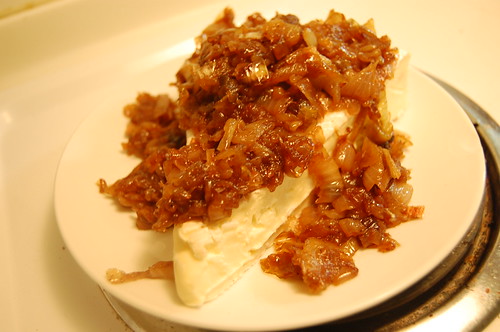
Baked Brie with Caramelized Onions
4 large onions, sliced
1 teaspoon salt
1 teaspoon black pepper
1 teaspoon sugar
3 tablespoons olive oil
generous wedge of Brie (we had a pound of Belletoile Triple Creme split among 5 of us)
sliced baguette or crisp french toasts
On medium heat in a large saute pan, heat the olive oil until it begins to shimmer. Add all the onions, salt, pepper, and sugar and stir occasionally. * The key is allowing the onions to brown a little, leaving crusty goodness on the bottom of the pan and then scraping up the bits with a wooden spoon. This trick gives the onions that wonderful mahogany color. If it looks like the scraps on the bottom of the pan are about to burn, add a little water (don’t be scared of a little sizzling), and it’ll be easier to scrape them up. No matter what, you have to make sure you stir them, especially towards the end when most of the moisture from the onions has evaporated.
This whole caramelizing process will take about 45 minutes to an hour, but you want to keep an eye on them; otherwise they might burn.
Meanwhile, preheat the oven to 350 F. Once the onions are dark brown, place the wedge of brie on an oven-safe dish, top with the onions, and stick in the oven for 7 minutes or until it starts to get gooey, but doesn’t melt completely.
Serve with the slices of baguette.
Asian comfort food: sesame peanut noodles
October 16, 2009 § 1 Comment
It’s starting to get pretty chilly here in DC and the rain isn’t helping any. On days like these, all I want to do is snuggle on the couch with a really good book and eat comfort food, which includes any type of carb. One of the dishes I start to crave the most is a sesame peanut noodle dish that my mom always used to make when she didn’t feel like making anything too complicated.
It’s great because you can customize it to your own tastes, and extremely simple so even if you’re living in a college dorm like me, it’s definitely manageable. I usually like to add shredded soy-poached chicken leftovers and lots and lots of hot sauce, but if you’re vegetarian, the dish is filling enough to be eaten without any meat. The sauce is wonderfully creamy and the flavors balance so well, with sweet countering savory perfectly.
I’ve made it enough that I don’t really use formal measurements, but I adapted the original recipe from, who else, Mark Bittman in his book, The Best Recipes in the World.

Sesame peanut noodles, serves 4-5
12 oz udon noodles, linguine would be ok too
2 tablespoons dark sesame oil
1/2 cup of peanut butter
1 tablespoon sugar
1/4 cup soy sauce
1 tablespoon rice wine vinegar
chili oil or hot sauce to taste
salt to taste
minced scallions as garnish
* the recipe also tastes really good with grated cucumber mixed into the sauce
1. Cook the noodles in boiling salted water until tender. Drain.
2. Whisk the peanut butter, soy sauce, sugar, vinegar, hot sauce, and salt. Gradually pour warm water into the mixture and continue whisking until the consistency of the sauce resembles heavy cream. Adjust the seasoning if needed.
3. Toss together the noodles and the sauce and add any more seasoning if necessary. Drizzle with additional sesame oil, if desired, and garnish with scallions.
This dish tastes good both warm and cold, so save leftovers!
Baked Brie at Emily’s 21st
September 30, 2009 § Leave a comment
My roommate, Emily, turned 21 on September 21st, but because it was a Monday evening, we decided to celebrate with a small dinner party.
There was a lot of great food involved – spinach salad with blue cheese, craisins, and candied pecans, mushroom tortellini in an alfredo sauce – but the best dish definitely was the appetizer, a baked brie with walnuts and honey.
Emily always gets Le Parisien salad at SweetGreen which has arugula, brie, pears, and almonds, so even though she isn’t a big cheese fan, we thought it’d be a good idea. Plus, the recipe is super easy and we already had the ingredients on hand.
It was even more of a success than we thought it would be. Some of the guests proclaimed themselves to be anti-French food, but that didn’t stop them from helping themselves to extras. Within 10 minutes, the entire wedge, walnuts and all, was wiped clean from the plate and the rosemary garlic crackers were gone.

Baked Brie
Wedge of soft Brie
honey, as much as you want
walnuts
Preheat oven to 350 F. Set the wedge of brie onto an oven safe serving platter and scatter with walnuts. Drizzle with as much honey as desired. Put serving platter on sheet pan and bake for 6-8 minutes or until the brie has started to ooze but not melt. Serve with crackers or slices of French baguette.
Spinach Catalan style and Shrimp with Garlic
August 19, 2009 § 1 Comment
Here are two more recipes from the tapas party that I promised. I first had the spinach dish at Jaleo in D.C. and I think it’s part of the reason I recently overcame my aversion to green and leafy vegetables (yes, I was one of those kids). The toastiness and crunch of the pine nuts adds really great flavor as well, and plumping the raisins in the hot water beforehand makes all the difference.
The shrimp was definitely the most popular dish of the night. We didn’t even bother with transferring it to a nice serving platter; I just moved the hot saute pan from the stove and set it on the counter, right before every one attacked the garlicky olive oil with crusty slices of bread. I think we bought about 2 pounds of smaller sized shrimp, and within 25-30 minutes, we had eaten it all. It was so good that we couldn’t even stop eating it even if we wanted to! It’s also something that anyone, even complete kitchen novices, can make so if you’ve never cooked anything before, I HIGHLY recommend letting this be your first attempt.

Spinach with raisins and pine nuts
1/4 cup raisins
1 pound of fresh spinach, stems removed
1/4 cup extra virgin olive oil
1/4 cup pine nutes
salt and black pepper to taste
Soak the raisins in hot water for about 10 minutes, until they become plump. Wash the spinach, but don’t completely dry the leaves. Steam in a large saute pan until they’ve become wilted and tender, less than 5 minutes. When the spinach is cooler, squeeze out all excess moisture and chop roughly.
Meanwhile, in a large skillet, drizzle in olive oil over medium heat and add the pine nuts and raisins. Stir occasionally, until the pine nuts have become toasted and slightly golden. Add the spinach and sautee for about another 4-5 minutes until everything glistens. Season with salt and pepper and serve hot or at room temperature.

Shrimp with garlic
1/2 cup extra virgin olive oil (it must be EVOO, the fruitiness really adds to the flavor)
6 garlic cloves, peeled and sliced as thin as possible
1 pound peeled shrimp (in this case, it’s better if the shrimp are on the smaller side)
coarse salt to taste (NO black pepper)
chopped parsley for garnish
On medium heat, combine oil and garlic in a deep skillet or saute pan. When the garlic begins to sizzle and turn golden, add the shrimp. Cook and stir until the shrimp have become opaque. About 3-4 minutes. MAKE SURE that you don’t overcook the shrimp, otherwise they get all nasty and rubbery and the dish is ruined (no pressure!).
Stir in however much salt you want, garnish with parsley and serve immediately, directly from the pan. The sauce tastes AMAZING with good country bread.
Straightforward sangria and crispy patatas bravas
August 5, 2009 § 2 Comments
As promised, two of the many recipes from tapas at Phil’s.

Sangria
1/2 cup sugar syrup (half part sugar, half part water, heated until sugar dissolves)
two bottles of fruit red wine or red Zinfandel (we used one of each and doubled the recipe)
juice of 2 lemons
2 oranges, sliced
2 lemons, sliced
2 apples, sliced
2 peaches, sliced
1 large bottle of sparkling water
Combine all ingredients in a pitcher or large punch bowl and refrigerate for at least 2 hours, preferably overnight. Serve with ice.

Patatas bravas
These are a classic tapas dish in Spain, and as with anything involving potatoes and extra virgin olive oil, they are so delicious without the heaviness of something deep-fried. Really easy to make too. They’re traditionally served with a spicy tomato sauce and/or allioli, the garlic mayonnaise.
16 small red potatoes, quartered. Leave skins on.
1/2 cup extra virgin olive oil, or enough to coat all the potatoes
coarse salt
Preheat the oven to 425 degrees. Put the potatoes in large pot and cover by 2 inches of water. Bring to a boil, and then turn heat to medium. Leave for about 20 minutes, until potatoes are fork tender.
Transfer potatoes to a baking sheet, toss with the olive oil and salt, and spread into one even layer. Bake for about 45 minutes, or until golden brown. Serve with tomato sauce.
Tomato Sauce
2 cups plain marinara sauce
cumin, cayenne pepper, paprika to taste
Combine to personal taste and heat.
Ddukbokgi, Korean-style gnocchi
June 30, 2009 § 2 Comments
A lot of people call dduki Korean rice cakes, but that name always conjures up images of the Quaker oats man and flavorless pieces of cardboard. I think these dduk can be more likened to gnocchi, but instead of potatoes and flour, these dumplings are made of rice flour and water.
One of the most popular dishes to feature these starchy bites is ddukbokgi which I tried for the first time at Mandu in Dupont Circle, DC. After some recipe browsing online, I realized that I’d never be able to recreate the dish authentically unless I had the Korean hot pepper paste, dochujang, and since I had never tried anything else with that same sauce, I thought I’d never have the opportunity.
However, thanks to my mom and her grocery shopping impulses, the last time I was home during spring break, she brought home a HUGE tub of the stuff that only cost $7 without even really knowing what it was good for. When I saw it after coming back from Hong Kong, on my first trip to Kam Man supermarket, I made a beeline for the cylindrical dduk (you can use ovalettes in this recipe too but I prefer the meatier cylinders) and cooked the dish the same day. Paired with Korean-style bbq short ribs, this makes a really delicious and satisfying meal.
Unlike the version at Mandu, I add red bell peppers, which accented the sweetness of the sauce and added the necessary crunch to contrast with the soft and squishy dduk. Yum. Just a note: if you’re heating leftovers the next day, it’s better to heat them on the stove rather than the microwave. That way they soften up again.

Separate the dduk. If you think the cylinders are too big, you can cut each of them in half, but I like them to be quite substantial bites. Drop the dduk in a large pot of boiling water, making sure you salt the water first. Drain after cooked all the way through and soft; this usually takes about 5 minutes.
In a bowl, mix together the soy sauce, dochujang, sugar, sesame oil, and garlic. It should taken on the consistency of ketchup.
In a wok or large saute pan on medium heat, add oil. When hot, add vegetables and stirfry for 3-4 minutes until cooked. Add the drained dduk as well as the sauce mixture and stir until everything is evenly coated and heated through. Add salt to taste. For garnish, you can top the ddukbokgi with sliced scallions and toasted sesame seeds.
Gimme my galbi
April 8, 2009 § Leave a comment
This is the recipe for the Korean galbi that accompanied the dry-fried green beans in the previous post. Sometimes, you just need a good helping of beef with a little bit of green on the side. These short ribs marinated for about 10 hours in the fridge before I slapped them on the smoking hot grill pan, and the flavor was amazing. Good caramelized crust on the outside and wonderfully tender insides.
Kiwi may seem like a strange ingredient, but other people – who add apple or pear – do add fruit, probably because it acts as a great tenderizer for the beef. Ideally you would puree everything in the marinade, but I don’t have a food processor so I just diced everything and it turned out fine. Everyone loved it, and this is definitely a great thing to eat when you have guests around and want to prepare them. In my experience, Korean bbq is pretty expensive in restaurants, so this is also a good way to eat well and save some money in the comfort of your own home. Just make sure someone else is delegated to do the dishes.

Korean Galbi
1 tbspn black pepper
Wash any bits of bone from the ribs and then pat dry with paper towels. Mix/puree the ingredients for the marinade and pour into a pan. Add the ribs and marinate for 8-10 hours, the longer the better. Heat a grill pan until smoking hot and grill for 2-3 minutes. These are thinly cut so you really don’t need that much time to get a medium rare short rib. Eat.
 Notes on Food